
Digital Marketing: A Complete Guide for Beginners
Digital Marketing: A Complete Guide for Beginners
Digital marketing focuses on reaching customers through online platforms, including websites, social media, search engines, and email. In today’s digital era, businesses rely on digital marketing to connect with their audience, increase brand awareness, and boost sales.
In today’s digital era, businesses cannot thrive without an online presence. Digital marketing has become the cornerstone of modern business strategies, allowing brands to reach audiences, generate leads, and boost sales efficiently. Unlike traditional marketing, which relies on print media, radio, or TV, digital marketing leverages online channels, social media platforms, search engines, and other digital tools to connect with potential customers in a measurable and cost-effective way.
Digital marketing is not just about advertising products; it’s about building relationships, understanding user behavior, and creating meaningful experiences. From startups to multinational companies, digital marketing has transformed how businesses communicate, sell, and grow.
Read our article on analytics and reporting to understand how to measure the success of your digital marketing campaigns.”https://shahanadg.com/
Why is Digital Marketing Important?
Digital marketing allows businesses to reach a wider audience at a lower cost compared to traditional methods. It helps you target the right audience, measure results, and improve your strategies using real-time data. Digital marketing refers to the promotion of products, services, or brands using digital channels and technologies. These channels include search engines like Google, social media platforms such as Facebook and Instagram, email marketing, mobile apps, websites, and online advertising networks.
The main objective of digital marketing is to reach the target audience in a timely, personalized, and measurable way. Unlike traditional methods, digital marketing allows brands to track performance through metrics like website traffic, click-through rates, conversions, and customer engagement.
Main Types of Digital Marketing
Digital marketing encompasses various strategies and techniques, each serving a unique purpose:
1. Search Engine Optimization (SEO)
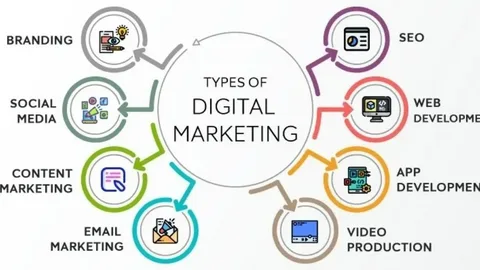
SEO is the process of optimizing a website to rank higher on search engine result pages (SERPs) organically. It involves keyword research, on-page optimization, technical SEO, and building quality backlinks. SEO is crucial because it increases visibility, drives organic traffic, and establishes credibility.
2. Pay-Per-Click Advertising (PPC)
PPC is a paid marketing strategy where advertisers pay a fee each time their ad is clicked. Platforms like Google Ads, Bing Ads, and social media networks allow businesses to target audiences based on demographics, location, and behavior. PPC delivers immediate traffic and helps businesses gain quick visibility while complementing SEO strategies.
3. Social Media Marketing (SMM)
Social media marketing involves promoting products and services on platforms like Facebook, Instagram, LinkedIn, Twitter, and TikTok. SMM is effective for building brand awareness, engaging with audiences, and driving traffic to websites. Creating shareable content, running targeted ad campaigns, and interacting with followers are key aspects of social media marketing.
4. Content Marketing
Content marketing focuses on creating and distributing valuable content to attract, inform, and engage a target audience. Blog posts, videos, infographics, eBooks, and case studies are common examples. High-quality content helps build trust, establish authority, and improve SEO rankings while nurturing leads through the sales funnel.
5. Email Marketing
Email marketing is one of the most cost-effective digital marketing strategies. By sending personalized emails to subscribers, businesses can promote products, announce offers, share newsletters, and maintain customer relationships. Tools like Mailchimp, HubSpot, and ConvertKit make automation and segmentation easier, increasing campaign effectiveness.
6. Affiliate Marketing
Affiliate marketing involves partnering with influencers or affiliates to promote products. Affiliates earn a commission for every sale generated through their referral link. This performance-based strategy allows businesses to reach wider audiences without upfront advertising costs.
7. Influencer Marketing
Influencer marketing leverages the reach and credibility of social media personalities or industry experts. Brands collaborate with influencers to promote products in an authentic way, which often drives higher engagement and conversions compared to traditional advertising.
8. Mobile Marketing
Mobile marketing targets users on smartphones and tablets through SMS, push notifications, mobile apps, and mobile-friendly websites. With a growing number of mobile users, mobile marketing ensures businesses remain accessible and relevant on devices people use the most.
Why Digital Marketing is Important
Digital marketing has become essential for businesses of all sizes. Here’s why:
- Wider Reach: Digital marketing allows businesses to reach audiences globally, breaking geographic barriers that limit traditional marketing.
- Cost-Effective: Compared to TV, radio, or print ads, digital marketing is more affordable and delivers measurable results.
- Targeted Marketing: Digital platforms provide advanced targeting options, allowing businesses to reach the right audience based on age, interests, behavior, and location.
- Measurable Results: Analytics tools track performance, enabling businesses to optimize campaigns for better ROI.
- Engagement: Digital marketing allows direct communication with customers through social media, email, and chatbots, enhancing customer relationships.
- Brand Building: Consistent online presence, quality content, and engagement help businesses establish credibility and authority in their niche.
Common Digital Marketing Challenges
While digital marketing offers many advantages, it comes with challenges:
- High Competition: Online markets are crowded, making it difficult to stand out. Unique branding and content quality are critical.
- Changing Algorithms: Platforms like Google and social media channels frequently update their algorithms, requiring marketers to stay adaptable.
- Data Privacy Concerns: Compliance with privacy laws like GDPR and CCPA is essential to maintain trust and avoid penalties.
- Content Overload: Users are bombarded with content daily, making it challenging to capture attention and maintain engagement.
- Technical Skills Required: Digital marketing requires proficiency in tools, analytics, SEO, and advertising platforms, which can be overwhelming for beginners
Trends Shaping Digital Marketing
Digital marketing is constantly evolving. Staying updated with trends helps businesses stay competitive:
- Artificial Intelligence: AI-powered tools analyze data, automate campaigns, and personalize user experiences.
- Video Marketing: Short-form videos, live streams, and tutorials drive engagement and improve conversions.
- Voice Search Optimization: With smart speakers and voice assistants, optimizing content for voice search is increasingly important.
- Chatbots and Automation: AI chatbots provide instant support, improve user experience, and streamline lead generation.
- Interactive Content: Quizzes, polls, AR experiences, and gamified content enhance engagement and brand recall.
- Sustainability Marketing: Consumers prefer brands that demonstrate eco-friendly practices, impacting messaging and campaigns.
Measuring Digital Marketing Success
Measuring success is critical to ensure campaigns are effective and ROI-positive. Key performance indicators (KPIs) include:
- Website Traffic: Number of visitors and their behavior on the website.
- Conversion Rates: Percentage of visitors completing desired actions (purchases, sign-ups, downloads).
- Click-Through Rates (CTR): Percentage of users clicking on ads, emails, or links.
- Engagement Metrics: Likes, shares, comments, and social media interactions.
- Return on Investment (ROI): Revenue generated compared to campaign costs.
- Customer Retention: Repeat purchases, loyalty program participation, and ongoing engagement.
By analyzing these metrics, marketers can optimize campaigns, adjust strategies, and improve performance continuously.
Key Components of a Successful Digital Marketing Strategy
A successful digital marketing strategy requires careful planning and execution. Here are the essential components:
1. Market Research and Audience Analysis
Understanding the target audience is the first step. Marketers analyze demographics, behavior, interests, and pain points to create strategies that resonate. Competitor analysis also helps identify opportunities and gaps in the market.
2. Setting Clear Goals
Every campaign should have clear objectives—whether it’s generating leads, increasing sales, improving brand awareness, or driving website traffic. Using SMART goals (Specific, Measurable, Achievable, Relevant, Time-bound) ensures campaigns remain focused.
3. Content Planning
Content is at the heart of digital marketing. Planning content around customer needs, trending topics, and SEO keywords ensures relevance and engagement. A content calendar helps maintain consistency and balance across platforms.
4. Multi-Channel Integration
A successful digital marketing strategy integrates multiple channels—SEO, social media, email, and PPC. This approach ensures a cohesive brand presence and better audience engagement.
5. Monitoring and Analytics
Digital marketing is data-driven. Using tools like Google Analytics, SEMrush, or social media insights allows marketers to track performance, understand user behavior, and adjust campaigns for maximum impact.
6. Optimization and Improvement
Continuous improvement is crucial. Regular A/B testing, campaign audits, and performance reviews help refine strategies, improve conversion rates, and maximize ROI.
How Digital Marketing Works
Digital marketing works by reaching people where they spend most of their time—online. With the right strategies, businesses can attract visitors, convert them into customers, and build lasting relationships.
Benefits of Digital Marketing
- More cost-effective than traditional marketing
- Easy to measure and track performance
- Better targeting of the right audience
- Ability to reach a global market
- Stronger customer engagement
Simple Tips to Get Started
- Build a professional website
- Focus on creating high-quality content
- Stay active on social media platforms
- Learn and apply basic SEO techniques
- Monitor your performance and make improvements
Future of Digital Marketing
The future of digital marketing will be shaped by innovation, personalization, and data-driven strategies. Some key aspects include:
- Hyper-Personalization: Using AI and analytics to deliver highly tailored experiences based on user behavior.
- Integration of AR/VR: Augmented and virtual reality will create immersive experiences for users, especially in e-commerce and real estate.
- Blockchain Technology: Enhancing transparency, preventing ad fraud, and securing digital transactions.
- Omnichannel Marketing: Seamless integration across multiple platforms, devices, and touchpoints for a consistent user journey.
- Sustainability and Ethical Marketing: Consumers increasingly value transparency, ethical practices, and social responsibility in brands.
The Role of Analytics in Digital Marketing
Data is at the heart of effective digital marketing. Analytics tools allow marketers to track every interaction a user has with a website, ad, or social media post. By analyzing metrics such as traffic sources, bounce rates, conversion rates, and engagement levels, businesses can make informed decisions and optimize campaigns in real time. Analytics also helps identify which strategies are delivering the best ROI and which areas need improvement. In essence, digital marketing without analytics is like navigating a ship without a compass—insights from data guide businesses toward smarter decisions, more targeted campaigns, and ultimately, better results.
The Importance of Customer Engagement in Digital Marketing
Customer engagement is a cornerstone of successful digital marketing. It goes beyond simply reaching your audience—it’s about creating meaningful interactions that foster trust and loyalty. Engaged customers are more likely to share content, provide feedback, and make repeat purchases. Strategies to boost engagement include responding promptly to comments on social media, sending personalized emails, creating interactive content like polls or quizzes, and providing valuable resources through blogs and videos. By focusing on engagement, businesses not only improve their relationship with customers but also strengthen their brand presence, increase conversions, and encourage word-of-mouth promotion in a competitive digital landscape.
Building a Strong Brand Through Digital Marketing
A strong brand is more than a logo or a tagline—it represents your business’s identity, values, and promise to customers. Digital marketing provides the tools to build and reinforce your brand consistently across all online channels. Through well-crafted social media content, visually appealing websites, engaging email campaigns, and consistent messaging, businesses can establish recognition and trust. A cohesive brand presence not only differentiates your business from competitors but also fosters loyalty, encourages repeat purchases, and drives long-term growth. Every digital touchpoint should reflect your brand’s personality, mission, and value proposition to create a lasting impression on your audience.
Leveraging Social Proof to Boost Conversions
Social proof is a psychological principle where people rely on the opinions and experiences of others when making decisions. In digital marketing, social proof can take the form of customer reviews, ratings, testimonials, influencer endorsements, and case studies. Incorporating social proof on websites, landing pages, and social media channels builds trust and credibility. When potential customers see that others have had positive experiences with your product or service, they are more likely to take action. Social proof not only increases conversions but also strengthens your brand’s reputation in the marketplace.
Adapting to Emerging Technologies in Digital Marketing
The digital landscape is constantly evolving, and businesses must adapt to stay competitive. Emerging technologies such as artificial intelligence (AI), machine learning, chatbots, augmented reality (AR), virtual reality (VR), and voice search are transforming how marketers interact with audiences. AI can automate tasks, analyze data, and deliver personalized experiences, while AR and VR offer immersive marketing opportunities for products and services. Voice search optimization ensures visibility as more users rely on digital assistants like Alexa and Siri. Staying informed about technological trends and integrating them into your strategy allows businesses to innovate, improve engagement, and deliver more meaningful customer experiences.
The Power of Video Marketing
Video marketing has emerged as one of the most effective forms of digital marketing. Videos are engaging, easy to consume, and highly shareable, making them ideal for building awareness and driving conversions. Businesses use videos for product demonstrations, tutorials, customer testimonials, live streams, and storytelling. Platforms like YouTube, Instagram Reels, TikTok, and Facebook support a variety of video formats, enabling brands to reach diverse audiences. When executed effectively, video marketing can significantly boost engagement rates, improve brand recall, and convey complex messages in a visually compelling way.
The Role of Personalization in Digital Marketing
Personalization has become a key factor in creating meaningful connections with customers. Instead of treating every audience member the same, personalized marketing tailors content, recommendations, and offers based on individual preferences, behavior, and past interactions. Email campaigns that address users by name, product suggestions based on browsing history, and targeted ads for specific segments are examples of personalization in action. By delivering relevant and timely experiences, businesses can increase engagement, build stronger relationships, and drive higher conversion rates. Personalization not only improves customer satisfaction but also positions a brand as attentive and customer-centric in a competitive digital landscape.
Social Proof: Building Trust and Credibility
In the competitive digital marketplace, consumers often face an overwhelming number of choices. Social proof is a powerful psychological principle that helps potential customers make decisions by showing them that others have already trusted and benefited from a product or service. By demonstrating credibility and reliability through social proof, businesses can reduce buyer hesitation, increase engagement, and ultimately boost conversions.
Social proof comes in many forms, including reviews, testimonials, case studies, user-generated content, and influencer endorsements. Each form plays a unique role in enhancing trust. Customer reviews are one of the most accessible forms of social proof. Positive reviews on websites, Google My Business, or e-commerce platforms reassure potential buyers that previous customers had a satisfying experience. For example, seeing a 5-star rating along with detailed feedback about a product’s quality or service reliability often encourages hesitant buyers to make a purchase. Conversely, addressing negative reviews professionally also shows transparency and strengthens credibility.
Testimonials provide a more personalized and narrative-driven form of social proof. Unlike general reviews, testimonials often include the customer’s name, position, or even a photo, adding authenticity and relatability. For instance, a software company may feature a testimonial from a CEO explaining how their product solved a specific business challenge. This detailed narrative not only highlights the product’s effectiveness but also helps potential customers envision its impact in their own context.
Case studies take social proof a step further by offering in-depth examples of how a product or service has successfully solved a problem. They typically include data, metrics, and results that showcase tangible outcomes. For example, an e-commerce platform may present a case study demonstrating how a small business increased revenue by 40% using their marketing tools. Case studies combine storytelling with evidence, making them highly persuasive for B2B marketing and high-value purchases.
Influencer endorsements have emerged as another effective form of social proof in the digital age. Influencers have built trust and credibility with their audiences, often in specific niches. When an influencer shares their experience with a brand or product, followers are more likely to pay attention and consider the recommendation. This is particularly effective on platforms like Instagram, YouTube, and TikTok, where audiences seek authentic, relatable content. Collaborating with influencers allows brands to reach targeted audiences and benefit from the trust that the influencer has already established.
User-generated content (UGC) is another compelling strategy. Encouraging customers to share photos, videos, or experiences using a product not only promotes authenticity but also builds a community around a brand. Brands can repost this content on social media or websites, allowing potential customers to see real people engaging with their products. UGC increases engagement, loyalty, and the perceived reliability of a brand.
The benefits of social proof extend beyond boosting sales. It enhances brand reputation, builds long-term customer trust, and differentiates a business from competitors. Companies that leverage social proof strategically can reduce marketing friction, making potential buyers more comfortable and confident in their decisions. Integrating multiple forms of social proof—reviews, testimonials, case studies, influencer endorsements, and UGC—creates a powerful, persuasive narrative that encourages customers to take action.
In conclusion, social proof is an essential component of any digital marketing strategy. It builds credibility, encourages trust, and drives conversions. Businesses that actively collect, showcase, and leverage social proof can strengthen their online presence, increase engagement, and foster long-term loyalty among their audience. In a world where consumers increasingly rely on peer opinions and online validation, social proof is no longer optional—it’s a necessity for sustainable growth.
Conclusion
Digital marketing is an important part of business growth in today’s competitive environment. With the right strategy and consistent effort, it can help you create a strong online presence and achieve long-term success.
Digital marketing is no longer optional—it is essential for businesses in the modern era. It provides tools to reach wider audiences, engage customers, and generate measurable results. From SEO to social media, email marketing to influencer campaigns, every aspect contributes to building brand visibility, authority, and trust.
Success in digital marketing requires a mix of creativity, strategy, and analytical thinking. By continuously learning, experimenting, and adapting to emerging trends, businesses can leverage digital marketing to stay competitive, grow their audience, and achieve long-term success.
Digital marketing is not just a career or tool; it is a journey of understanding people, technology, and communication. As the digital landscape evolves, so too must the strategies, ensuring that brands remain relevant, effective, and impactful in a rapidly changing world.